
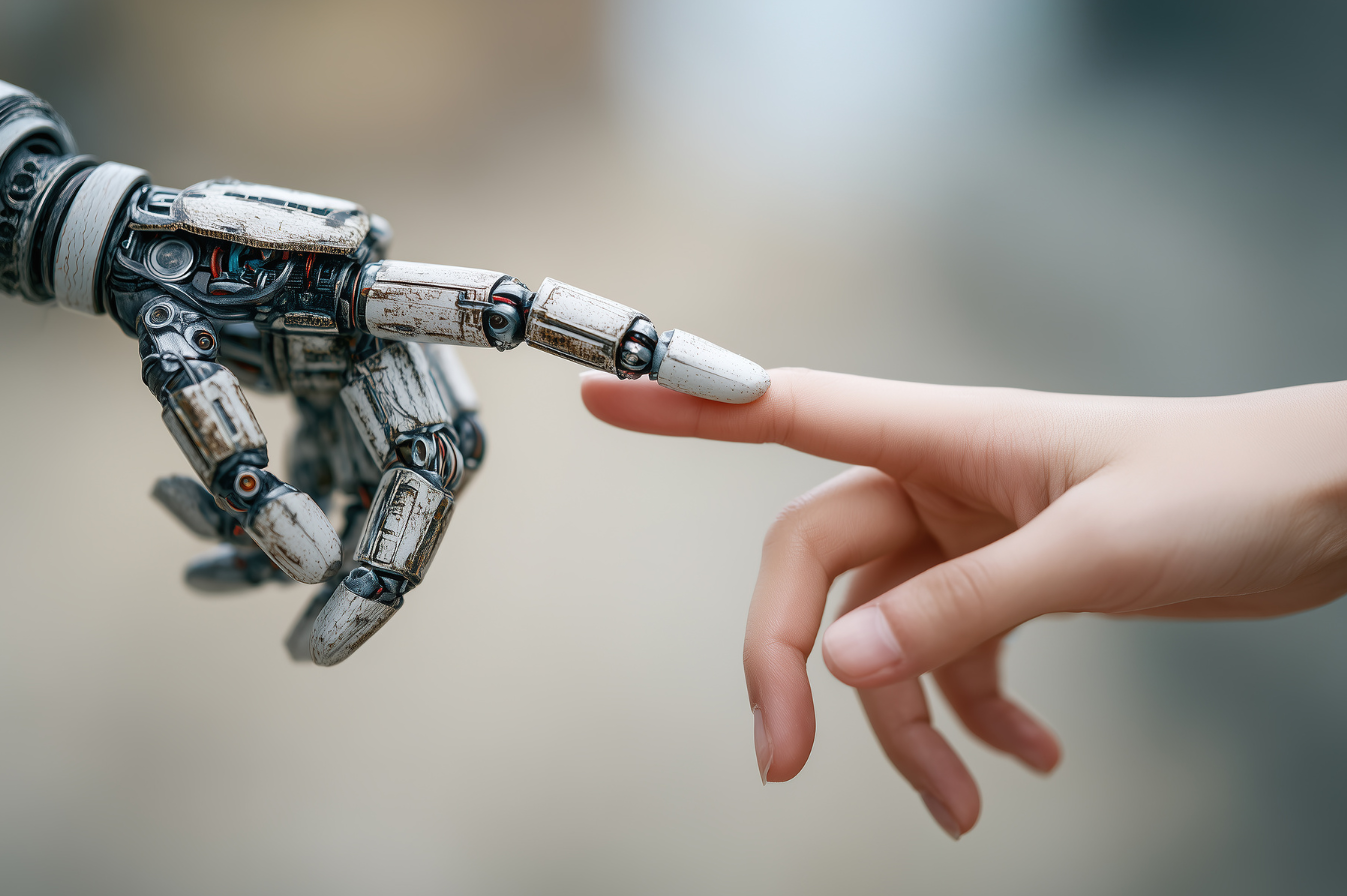
Artificial intelligence is no longer a distant concept. It’s here, woven into the systems we use, the decisions we make, and the way we work. For leaders, this shift presents both a challenge and an opportunity: how to guide teams through transformation without losing sight of what makes work meaningful.
AI is changing the landscape, but it’s not replacing leadership. It’s reshaping it.
The Role of Leadership in an AI-Driven World
As AI tools become more capable, the human side of leadership becomes more essential. Clarity, empathy, and vision are no longer soft skills. They are survival skills.
Leaders today must help their teams:
- Understand what AI can and cannot do
- Navigate uncertainty with confidence
- Stay grounded in ethical decision-making
- Build new skills without fear or resistance
This isn’t about mastering every algorithm. It’s about creating environments where people feel safe to learn, adapt, and grow alongside technology.
From Control to Collaboration
Traditional leadership often relied on control — clear hierarchies, fixed roles, predictable outcomes. AI disrupts that. It introduces fluidity, speed, and complexity. In response, leadership must shift toward collaboration.
That means:
- Encouraging experimentation
- Listening to diverse perspectives
- Making space for continuous learning
- Leading with questions, not just answers
The most effective leaders in this new era won’t be the ones who know everything. They’ll be the ones who know how to learn, unlearn, and relearn, and help others do the same.
Ethics, Trust, and Human Judgment
AI can process data. It can identify patterns. But it cannot understand context, values, or consequences the way humans can. That’s where leadership comes in.
Leaders must ensure that AI is used responsibly. That means asking hard questions:
- Is this tool reinforcing bias?
- Are we transparent about how decisions are made?
- Are we protecting privacy and dignity?
Technology moves fast. Trust takes time. Leadership is what bridges the gap.
The Future Is Human-Centered
AI will continue to evolve. It will become more powerful, more integrated, and more invisible. But the future of work will still be shaped by people, by the choices we make, the values we uphold, and the relationships we build.
As Marshall McLuhan once said, “We shape our tools and thereafter our tools shape us.”
Leadership in the age of AI is not about resisting change. It’s about guiding it. It’s about helping people stay grounded, curious, and connected, even as the world transforms around them.